
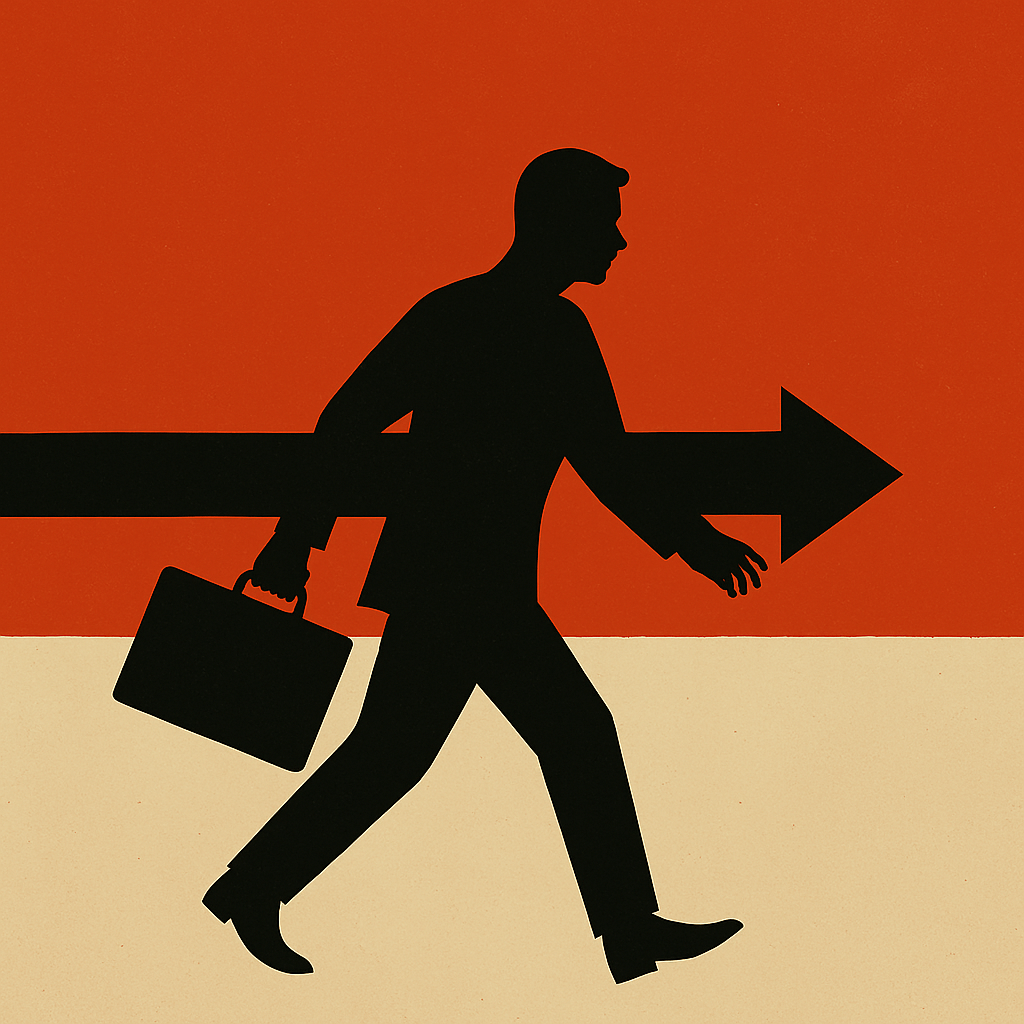
Most organizations mistake constant busyness for strong leadership—but motion isn’t progress. Discover why anxious systems reward activity over clarity, and how real leaders resist the culture of noise.
At almost every level of modern organizations—startups, nonprofits, corporations—you’ll find a devastating but subtle confusion: the conflation of busyness with leadership.
When a leader is visibly moving—hopping from meeting to meeting, responding to emails at all hours, constantly immersed in activity—teams tend to assume they are leading well.
When teams are frenetically producing updates, reports, and visible “wins,” executives assume they are healthy.
But busyness is not leadership.
And frenetic motion is not proof of organizational health.
In fact, many of the most anxious, dysfunctional leadership cultures are the ones that seem the most active—because constant motion creates the illusion of control even when real leadership is absent.
Movement gives comfort, masking the absence of clear direction, courageous decision-making, and deep organizational trust.
This article is about why busyness gets mistaken for leadership, how that confusion becomes cultural, and what leadership actually requires in a world addicted to speed.
Why Busyness Looks Like Leadership (Even When It’s Not)
Busyness is easy to recognize.
It is visible. Quantifiable. It fills the calendar and produces immediate artifacts: emails, task lists, Slack notifications, status meetings.
In organizations dominated by fear, complexity, or performance anxiety, visible motion becomes the easiest substitute for deep leadership because it gives the illusion that something important is happening.
Leaders who are always moving seem committed. Teams that are always producing seem engaged.
And when the true work of leadership—creating clarity, building emotional resilience, setting principled direction—is hard to measure or too slow to reward, organizations cling to what they can see.
“When uncertainty is high, leaders often double down on action—even when reflection would better serve the system.”
— Harvard Business Review, “The Busyness Trap,” 2020
This is the trap:
Motion looks like progress.
Responsiveness looks like leadership.
Hyperactivity looks like competence.
But what is happening beneath the surface is something far more corrosive:
Teams confuse the pace of activity with the health of the culture.
Leaders confuse being needed with being effective.
Executives confuse noise with growth.
And the longer it goes unchecked, the harder it becomes to lead strategically—because the system learns to equate activity with value.
How Busyness Becomes a Leadership Culture
If you reward busyness long enough, it doesn’t just distort leadership—it becomes the culture.
At first, the signs are almost invisible.
Leaders praised for being “hands-on” subtly absorb that praise as a survival skill.
Teams that are constantly “visible” earn trust, while quieter, more deliberate work is overlooked or undervalued.
Initiatives judged by how many updates they generate—not by whether they solve meaningful problems—become standard practice.
Eventually, the real metrics of leadership—clarity, courage, resilience, trust—get replaced by visible motion.
A new set of unwritten rules takes hold:
- You are valued by how often you can be reached, not how well you steward priorities.
- You are trusted for how busy you appear, not how wisely you choose what to pursue.
- You are promoted for visibility, not for building long-term health.
At scale, busyness becomes the very oxygen of the organization—inhabited without question, defended instinctively, passed down as best practice.
And leadership collapses into emotional overfunctioning: leaders doing for others what they should be equipping others to do themselves, reacting instead of leading, exhausting themselves in a system designed to consume rather than align.
Systems theory explains this dynamic well.
In anxious environments, leaders unconsciously mirror the system’s fear.
Instead of disrupting the anxiety with clarity, they amplify it with motion.
Instead of slowing down to diagnose, they speed up to survive.
What Busyness Costs Organizations
The costs of busyness-based leadership don’t show up on quarterly reports.
At least, not right away.
At first, everything looks fine—maybe even better than fine.
Activity is high. Updates are flowing. Promotions are happening.
But over time, the emotional infrastructure that sustains organizations quietly erodes.
- Strategic drift takes root.
Without time to think deeply, recalibrate, and ask hard questions, the organization drifts. Teams focus on executing tasks, not evaluating their alignment with larger strategic aims. According to McKinsey’s 2021 report on resilience, organizations trapped in high-activity, low-clarity environments were 60% more likely to suffer major reversals during economic shocks than slower, more deliberate organizations. - Trust atrophies.
Teams sense that leadership is reactive, unavailable for real coaching, and unwilling to create psychological safety. Leaders who are always “busy” seem inaccessible or disinterested in real listening. A 2019 Gallup study showed that trust in leadership correlates more strongly with leader availability and emotional steadiness than with technical expertise. - Fear culture accelerates.
When visibility is valued over thoughtful contribution, employees learn to avoid hard conversations, suppress dissent, and polish optics rather than surfacing real risks. Innovation slows. Silos deepen. - Burnout metastasizes.
Chronic busyness conditions teams to believe that slowing down is failure. Creativity collapses. Personal agency erodes. In high-urgency systems, employees report burnout at nearly 3x the rate of employees in organizations with clear, enforced priorities (Gallup, 2022).
By the time these costs show up on balance sheets—through attrition, disengagement, or failed initiatives—the emotional damage to the system is entrenched.
Motion may have delayed collapse, but it never prevented it.
When I Confused Busyness for Leadership
I didn’t learn this lesson theoretically.
I learned it by living through the slow erosion of my own leadership.
In my first major leadership role, I believed that being busy was part of being responsible.
I prided myself on being available to my team at all hours, attending every meeting, fielding every request, answering every email within minutes. I thought leadership meant omnipresence.
And for a while, it worked.
People noticed.
Supervisors praised my commitment.
Team members appreciated my responsiveness.
But below the surface, the cracks widened.
Important priorities slipped because I was too fragmented to hold the strategic thread.
Team members began protecting me from problems, assuming I was too overwhelmed to handle them.
Hard conversations were postponed indefinitely because there was never a good time for reflection.
Real emotional connection—listening, coaching, developing—atrophied under the constant barrage of tasks.
The low point came in an offhand comment from one of my direct reports:
“You’re always in the room, but it feels like you’re not really here.”
It really bothered me.
Because it was true.
I was so busy leading that I had stopped leading.
I had traded stewardship for motion.
And no one was better because of it—including me.
What Real Leadership Looks Like
Real leadership often looks boring compared to frantic leadership.
It does not generate constant status updates.
It does not require omnipresence.
It often looks invisible—until a crisis comes, and the strength of the culture it built is revealed.
Real leadership is about protecting clarity when others clamor for noise.
It is about absorbing fear without transmitting it.
It is about shaping direction, not just reacting to motion.
It looks like:
- Strategic patience.
Leaders who resist the temptation to respond to every urgency and instead steward a steady course, allowing the system to breathe, rethink, and re-center before rushing to action. - Emotional steadiness.
Leaders who refuse to mirror the system’s panic, who regulate themselves first before attempting to regulate others, becoming a non-anxious presence that stabilizes decision-making. - Relentless priority protection.
Leaders who say no far more than they say yes—not because they are inflexible, but because they understand that diffused focus destroys long-term health. Protecting focus is an act of leadership, not selfishness. - A bias for depth over optics.
Leaders who value building strong, small core teams rather than broadcasting constant signals of busyness. Leaders who care more about the operating health of their organization than about how impressive it looks from the outside.
Real leadership isn’t slow because it’s lazy.
It’s slow because it’s serious.
Final Thought: Motion Isn’t Progress
Busyness feels good because it feels like something is happening.
It anesthetizes fear.
It flatters egos.
It distracts from harder, more important work.
But movement without reflection is not progress.
Responsiveness without strategy is not leadership.
Visibility without clarity is not trustworthiness.
The best leaders resist the seduction of busyness.
They resist the lie that more activity is better leadership.
They build spaces for teams to think deeply, risk intelligently, and trust fully.
In anxious cultures, that kind of leadership will always feel slow at first.
But in the long run, it’s the only leadership that builds anything worth keeping.
📩 Want longform leadership insights like this delivered weekly? Subscribe to The Influence Journal—serious essays for leaders building trust, clarity, and courage in a reactive world.
 The Influence Journal | Leadership, Trust, and the Psychology of Culture
Leave a comment