
How Over-Management Erodes Trust, Talent, and Real Leadership
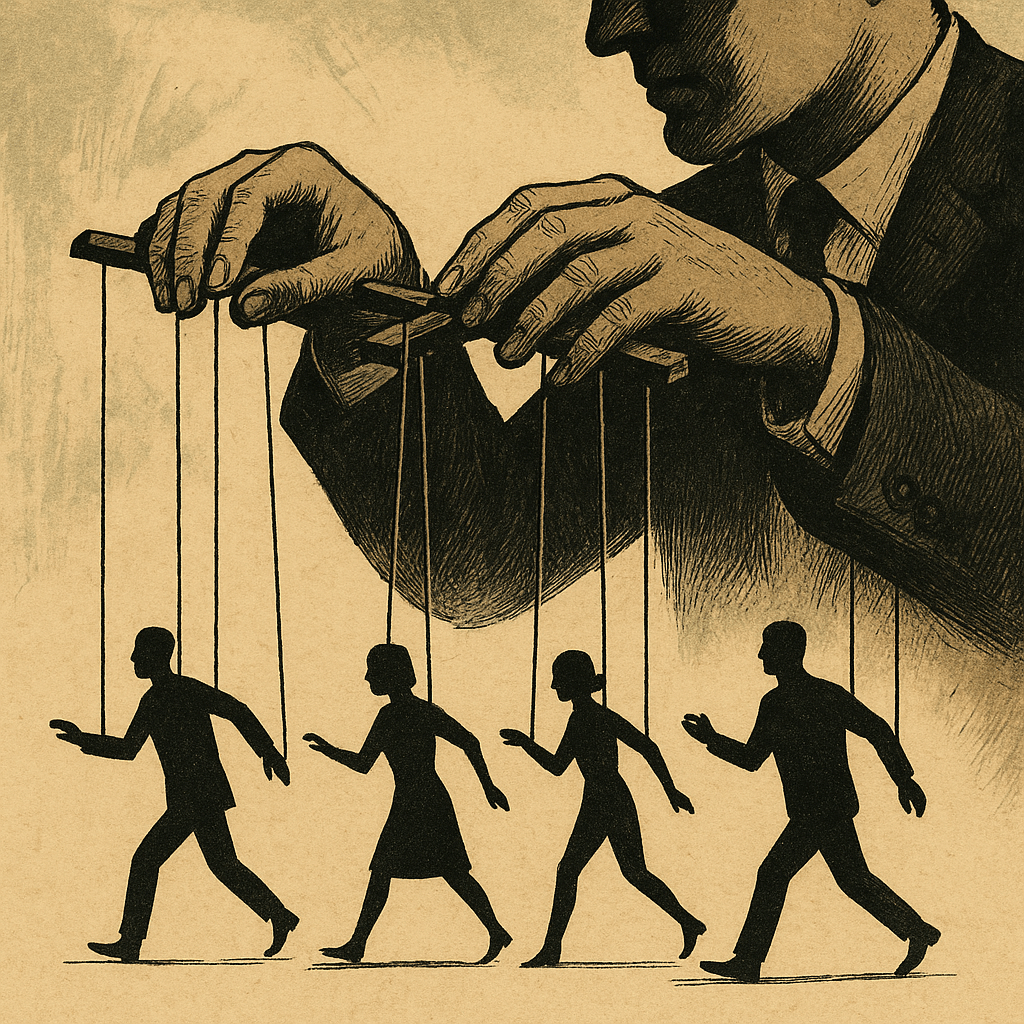
When leaders confuse control with competence, they stifle trust, crush innovation, and drive top talent away. This in-depth essay explores how micromanagement masquerades as leadership—and why real competence begins with letting go.
The Leadership Mirage
There’s a kind of leader found in nearly every organization—well-dressed, ever-present, and always informed. They monitor progress down to the smallest detail. They join every call, approve every slide deck, review every customer interaction. Nothing escapes their attention, and they pride themselves on it. To their superiors, they appear diligent. Engaged. In control.
But control is not competence. And what looks like high engagement often masks something else entirely: anxiety, identity confusion, or an inability to let go. These leaders don’t trust the system to work without them, so they insert themselves into every gear of the machine. And while it may look like excellence from the outside, the system is slowly grinding itself down beneath them.
When leaders confuse control with competence, the results are deceptively damaging. It doesn’t look like dysfunction at first—because the machine keeps moving. But inside the team, trust shrinks. Innovation halts. Ownership dies. Over time, the environment becomes fragile, dependent, and emotionally exhausting. And the people most capable of leading eventually walk away.
The Illusion of Control: Why It Feels Like Leadership
It’s easy to understand the appeal. Control offers psychological safety, especially in roles where outcomes are uncertain and stakes are high. Most leaders are promoted based on individual performance—meeting deadlines, solving problems, producing results. So when they step into leadership, they fall back on the same instincts that earned them the promotion: know everything, touch everything, hold everything together.
But leadership is not an extension of individual contribution. It’s a shift into systemic thinking—building people, not just products. That’s where the problem starts. Control feels like you’re leading because you’re still busy. You’re still visible. You’re still involved. But none of those things guarantee effectiveness.
This is why so many leaders resist delegation. It feels like abdication. They don’t want to be seen as disengaged. They fear being unnecessary. And so, control becomes a kind of performance—reassurance to themselves and to others that they’re still important.
The deeper the fear of irrelevance, the tighter the grip.
Micromanagement and the Culture of Decline
Micromanagement rarely shows up on performance reviews. But it almost always shows up in exit interviews. It kills morale quietly. People stop offering ideas. They hesitate before making decisions. They learn to play it safe—because every initiative, no matter how thoughtful, risks being rewritten, overridden, or delayed by the person who claims to “just want to help.”
In environments like this, performance doesn’t improve—it plateaus. But to the controlling leader, the lack of mistakes looks like progress. The silence looks like agreement. The disengagement looks like focus. And so they double down.
Teams under high-control leadership exhibit a consistent set of symptoms: low trust, high turnover, passive behavior, lack of innovation, and constant burnout. Researchers in organizational psychology have shown that employees perform best when they have high levels of autonomy, clarity, and trust—conditions that are impossible to sustain when everything is filtered through a single authority figure. The more oversight a leader imposes, the less initiative their team takes. It’s not because the team is weak. It’s because they’ve learned that acting independently carries more risk than reward.
Trust Erosion Is Silent, Then Sudden
At first, people don’t push back. They give the benefit of the doubt. They assume the leader is just trying to help. But over time, the pattern becomes clear. Every decision must be pre-cleared. Every idea must be filtered. Every task must be reported. What starts as collaboration becomes dependency. And dependency breeds resentment.
People start to self-protect. They hedge their language. They delay action. They stop thinking creatively because they know their thinking doesn’t matter. And slowly, the relational fabric of the team begins to disintegrate. What remains is compliance—but not commitment.
In the long run, trust isn’t broken with an explosion. It’s worn down by friction. Dozens of small, daily reinforcements that say, “I don’t fully trust you.” Leaders may never say it out loud, but the culture learns it anyway. And once trust is gone, competence doesn’t matter—because no one will take the risks required for excellence.
Why Competent People Leave
High performers don’t stick around when they’re treated like liabilities. They don’t want to be managed—they want to be unleashed. But control-based leaders see independence as threat, not potential. They view confident employees as a challenge to their authority, not a gift to the organization. And so they tighten their grip even more.
Eventually, the people who want to build things, solve problems, and lead with initiative realize they have no room to do it. And so they leave. Sometimes quietly. Sometimes suddenly. But always after the same realization: “This place is not designed for someone like me.”
And here’s the bitter irony: the more talent walks away, the more control-based leaders feel justified in their management style. “If I don’t stay on top of everything, things fall apart.” Yes—because the people who could have led with you are already gone.
Control Is a Symptom—Not a Strategy
Control is rarely the root issue. It’s usually a response to something deeper:
1. Insecure Identity
Leaders who lack clarity about their own value often overcompensate with hyper-visibility. They measure their worth by how needed they are. And if they’re not looped in, they feel threatened. This creates a dangerous loop where being central becomes the goal—not leading well.
2. Dysfunctional Systems
In the absence of clear structures, good leaders feel forced to compensate. If expectations aren’t defined, communication is inconsistent, and roles are fuzzy, control fills the vacuum. But instead of addressing the system, leaders address the symptoms—and in doing so, become the bottleneck.
3. Misunderstood Leadership
Many leaders simply haven’t made the shift from doing to developing. They were excellent contributors, and now they’re trying to lead by doing more of what they were good at. But leadership isn’t additive—it’s transformative. It requires a new set of muscles. Control is easier. Competence, at this level, looks like empowerment.
What Competence Really Looks Like
The most competent leaders are rarely the most involved. They’re the ones whose teams can function with clarity, energy, and ownership—even when the leader is away.
They don’t need to attend every meeting, because they’ve built a culture where good decisions are made without their presence.
They don’t need to approve every detail, because they’ve developed their people to lead with judgment and integrity.
They don’t rely on authority to maintain influence, because their influence comes from trust, not control.
Competence in leadership means building people who are more capable because you led them—not more dependent because you managed them.
Identity-First Leadership: Leading from Security
This is where Identity-First Leadership becomes more than a philosophy—it becomes a practical solution. Leaders who are secure in who they are don’t lead to prove themselves. They don’t measure their value by how involved they are. They know their worth doesn’t come from being in the room—it comes from shaping the room.
That kind of leadership can step back without feeling invisible. It can delegate without fear. It can trust without flinching.
When identity is secure, control is no longer necessary.
Final Reflection
If your organization equates control with competence, it’s only a matter of time before performance suffers. Trust will disappear. Innovation will dry up. And the people most capable of transforming the culture will quietly opt out.
Leadership built on control is leadership in survival mode. It may keep things from falling apart—but it will never build anything worth keeping.
Real leadership builds systems, develops people, and multiplies capacity. It doesn’t hoard responsibility. It releases it—with clarity, confidence, and care.
So ask yourself:
Do your people perform because of your presence—or because of the environment your leadership has created?
The answer to that question will determine everything that comes next.
📩 Want to build trust-first systems and scale identity-driven leadership?
Subscribe to The Influence Journal or reach out for training and consulting at influencejournalforleaders.com.
 The Influence Journal | Leadership, Trust, and the Psychology of Culture
Leave a comment