
Why You Feel Tired Even When You’re Not Overworked
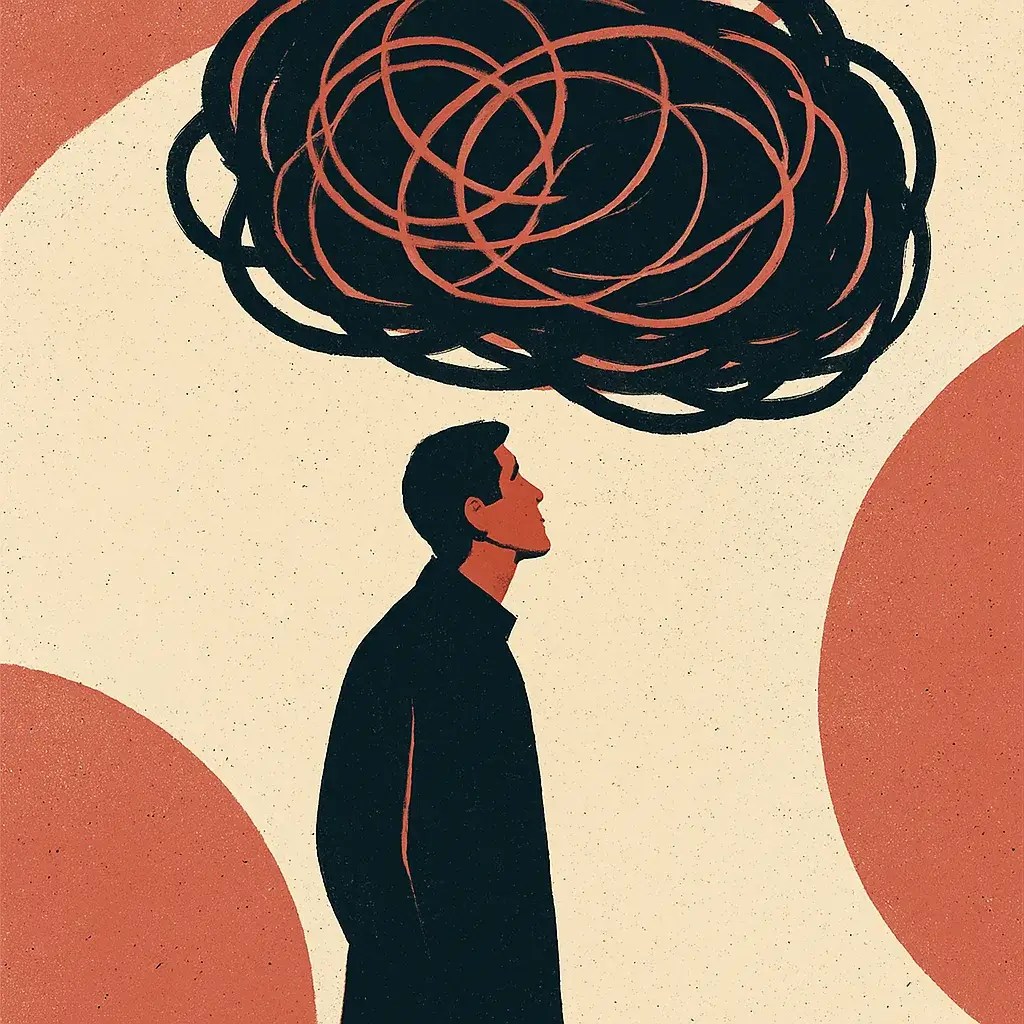
So many leaders ask, “Why am I so tired?”—even when they’re not overloaded. Discover 5 hidden drains and 5 strategies to avoid quiet leadership burnout.
There was a morning in the spring of 2022 when I sat at my desk staring at my calendar—and nothing about it looked overwhelming. I had slept decently. I had only one meeting scheduled before lunch. No major deadlines, no crises, no 12-tab chaos to unravel. And yet, I felt hollow. Tired in a way that coffee couldn’t touch. My limbs were heavy. My thoughts were slow. I wasn’t burned out in the classic, flame-out-from-overwork sense. But something inside me was depleted.
That day, I realized I wasn’t dealing with time-based fatigue. I was dealing with leadership energy fatigue—a quieter, less visible form of exhaustion that doesn’t come from doing too much, but from carrying too much of the wrong thing for too long.
And I’m not alone.
Across industries, leaders are reporting record levels of emotional exhaustion—even when their workloads haven’t technically increased. According to a 2023 report by Deloitte, 70% of executives said they were seriously considering stepping away from their role for mental health reasons, despite working fewer hours than in peak pandemic years. This points to a deeper issue: one that’s less about how many hours we work, and more about what leadership is currently costing us psychologically.
The Myth of the Time-Based Burnout
We tend to think of burnout as a problem of too much work and not enough rest. That framework makes sense—up to a point. Certainly, working twelve-hour days with no boundaries will break anyone down eventually. But in leadership, it’s not always the hours that break you—it’s the weight.
The leading burnout model, developed by Christina Maslach and Susan Jackson, identifies three key components of true burnout: emotional exhaustion, depersonalization (a sense of detachment), and reduced personal accomplishment. What’s interesting is that only one of those has to do with time. The other two are about how disconnected a leader becomes from their own internal compass.
In other words, you can be emotionally burned out even if your work schedule looks totally manageable on paper.
If your job requires constant emotional regulation, culture-shaping, and decision-making under uncertainty—you will burn out from the weight, not the workload.
This explains why so many leaders feel drained after what should be a light day. It’s not physical labor that’s wearing them out. It’s emotional labor.
What’s Really Draining Leaders (That No One Talks About)
Let’s name it: Leadership is emotionally expensive—not just cognitively demanding. But unlike athletes or artists, leaders are rarely given language or tools to manage their emotional energy. Most just assume they need more sleep, more coffee, or a better morning routine.
In reality, the modern leader is navigating a minefield of unseen energy drains. Here are four of the biggest:
1. Constant Context Switching
Leadership demands range across strategy, operations, coaching, crisis management, innovation, and people care. Most of us shift between these roles in five-minute increments. One moment you’re reviewing a budget forecast, the next you’re de-escalating tension between two team members, and ten minutes later you’re preparing an all-hands pep talk. Each role requires a different mindset, tone, and emotional posture.
This kind of context switching depletes executive function at a neurological level. Research published in the Journal of Experimental Psychology confirms that task-switching decreases accuracy and increases cognitive load—even more so when switching between emotionally contrasting tasks. The average leader isn’t just context-switching between functions; they’re switching between emotional tones. That’s a recipe for exhaustion.
2. Emotional Containment
Whether they admit it or not, most teams look to their leaders as emotional stabilizers. In healthy organizations, this is a privilege. But in broken or ambiguous ones, it becomes a quiet torment.
You are the person who absorbs everyone else’s fear, doubt, and anxiety—and you are expected to remain composed and confident through it all. The moment you appear too anxious or uncertain, people project collapse. And so you learn to compartmentalize. To carry tension without releasing it.
But here’s what the science says: Chronic emotional suppression elevates cortisol, leads to physical tension, and significantly lowers immune response. In one study published in Emotion, people who routinely suppressed negative emotions during conflict had higher cardiovascular strain and lower emotional recall. Suppressing emotion doesn’t make you strong. It makes you numb—and eventually sick.
3. High-Stakes Ambiguity
Most leadership decisions don’t come with full information. You rarely get to make choices in clear conditions. There’s usually too much at stake, too little data, and too many people waiting for clarity. The higher you go, the more ambiguity you inherit.
This “gray zone leadership,” as some have called it, creates low-grade anxiety that rarely turns off. You might not even realize how tense you are until it erupts—or until it wears you down to the point where you lose interest in decisions altogether. That’s when disengagement sets in.
4. Low-Trust Environments
This is perhaps the most devastating and underdiagnosed drain on leadership energy. If you do not trust your team, your board, your boss, or your peers, you are living in performance mode 24/7. Every meeting becomes a chess match. Every word must be calculated. There is no rest when psychological safety is absent—only performance. And performance is not a renewable energy source.
5. Mission-Drift Masquerading as Productivity
There is a kind of leadership exhaustion that doesn’t come from chaos—but from doing everything right and still feeling nothing.
It’s the exhaustion of someone who’s executing perfectly against the wrong goal. Whose calendar is full, team is humming, metrics are up—but who quietly feels like they’ve lost the thread. Like they’re performing excellence instead of pursuing purpose.
This is what I call mission-drift fatigue—and it might be the most disorienting drain of all.
You don’t feel burned out because you’re failing. You feel burned out because your work no longer feels like it matters. Or worse: it matters to everyone but you. That disconnect is subtle at first—just a low hum of apathy or detachment. But over time, it becomes soul-weariness. You start to dread Monday not because it’s hard, but because it feels hollow.
Researchers call this value misalignment, and it’s a major predictor of burnout—even in high-functioning, high-performing professionals. In a 2021 study published in Frontiers in Psychology, employees who reported high value misalignment with their organizations were 3.6 times more likely to experience burnout symptoms, regardless of hours worked or workload intensity.
In leadership, this misalignment can sneak in silently—especially if your title gets more prestige, your platform grows, or your influence expands. You start doing more of what looks important but less of what once made your work feel alive.
And the catch? From the outside, everything still looks great. Which means no one questions it—except you. That’s what makes this kind of exhaustion so dangerous. It’s invisible. But it eats you from the inside out.
The Personal Cost of “Being the Strong One”
There was a stretch of time during my transition from my leadership in a large organization to creating something new—something uncertain, untested, and deeply personal—when I realized I had no place to be not okay. I was carrying my family’s financial stress, my kids’ emotional adjustment, the pressure of starting from scratch, and my own internal doubts. I wasn’t working 80 hours a week. But I felt completely cooked. And I didn’t know why.
It wasn’t until I looked at a week in hindsight that I saw it. I had spent hours coaching others through decisions I didn’t have clarity on myself. I was publicly optimistic and privately unraveling. Every conversation required me to regulate their emotions—while mine sat in a drawer I hadn’t opened in months. My exhaustion wasn’t physical. It was spiritual. Emotional. Existential.
That was my energy crisis moment. And I know I’m not the only one who’s had one.
How to Recover Leadership Energy (Without Quitting Your Job or Moving to a Monastery)
You don’t need a sabbatical to start recovering your energy—though one might help. What you need first is awareness of what’s draining you, and then a strategy to slowly rebalance the equation.
1. Energy Mapping: Know Your Drains Before You Crash
Most leaders know their calendar—but they don’t know their energy map. They know when meetings happen, but they don’t know when they begin to fade. They can recite their priorities, but not the parts of their day that consistently leave them feeling fragmented, reactive, or emotionally numb.
That’s a problem. Because energy—not time—is your most limited resource. And unlike your calendar, your energy doesn’t respond to intention. It responds to friction, fear, and focus.
Psychologist Jim Loehr and performance coach Tony Schwartz famously argued in The Power of Full Engagement that performance is best understood not by time management, but energy management. The most effective leaders aren’t the busiest—they’re the ones who know how to optimize, protect, and recover their energy throughout the week.
Start by tracking a week—not what you did, but how you felt after doing it. What left you tense? What left you flat? What left you alive?
This isn’t about escaping all draining work. Some of your most important responsibilities will cost you energy. The point is to stop bleeding energy without realizing it. That one recurring meeting where no decisions are made? That daily check-in that’s really just anxiety dressed up as accountability? Those things have a cost. Know what you’re spending.
Once you have the map, you can begin making decisions from your energy, not just your title. You can design your week with intention—adding buffers, building recovery, and saying no to what breaks you down before you even start.
2. Create Processing Zones: Stop Performing and Start Feeling Again
The higher you go in leadership, the fewer places you have to be real. That’s not just lonely. It’s dangerous.
Because leaders who don’t have a place to process eventually start leaking pain into places it doesn’t belong—meetings, emails, relationships, even their bodies.
You don’t need 15 friends or a mastermind group of unicorns. You need one or two safe, honest processing zones. That might be a therapist. It might be a coach. It might be a friend who’s earned the right to hear the unfiltered version of you. But you need someone you can talk to without translation.
Leadership is emotional labor. And emotional labor without a place to metabolize emotion leads to emotional numbness, then resentment, then collapse.
This isn’t a personality preference. It’s a human requirement. As researcher Brené Brown notes, “We cannot selectively numb emotions. When we numb the dark, we also numb the light.” If you want to recover joy, vision, or connection in your leadership—you have to start by naming your pain, your fear, your exhaustion.
Your processing zone doesn’t need to be eloquent. It just needs to be safe. Somewhere your sentences don’t have to end in strategic outcomes. Somewhere you don’t have to protect anyone from the truth.
You can’t heal what you won’t allow yourself to say out loud.
3. Ritualize Micro-Recovery: Recharge Before You Run Empty
We’re conditioned to think of recovery as a retreat: weekends, vacations, sabbaticals. But leadership doesn’t work like that. You don’t burn out once every few years. You leak out every day. That means your recovery strategy needs to be daily, ritualized, and small enough to repeat.
Think of it like hydration. You don’t drink water once a week. You sip it all day. Leadership is the same. If you only try to recover when you crash, you’re managing a crisis, not your health.
Micro-recovery is the art of giving your nervous system space to reset—before it forces you to shut down.
Here’s what the neuroscience says: just 10 minutes of nature exposure, silent reflection, or slow breathing can significantly reduce cortisol, lower blood pressure, and reset the brain’s default mode network. (Nature Neuroscience, 2019). These aren’t woo-woo tactics. They’re survival skills for anyone whose job involves emotional regulation, mental stimulation, and decision-making on demand.
For you, it might be 20 minutes of journaling before work. A slow walk after your hardest meeting. A calendar block that says “deep reset” instead of “catch-up.” You don’t need to “earn” these moments. You need to build them into the structure of your week, the way you’d build in client meetings or payroll.
Because if you don’t rest, you don’t lead. You react. You posture. You perform. But you don’t lead.
4. Lead From Rest, Not Role: Reclaim Your Identity Before It Costs You
Most leaders begin by leading from identity. They have a deep conviction, a rooted purpose, a clear sense of who they are and why it matters. But over time—especially under stress—that identity is replaced by role performance. We become the title. The persona. The expectations. And eventually, we can’t tell where we end and the job begins.
That’s where the real breakdown happens. Because you were never designed to get your worth from a role—not even a noble one.
In a 2022 meta-analysis of leadership burnout in Occupational Health Science, researchers found that identity detachment was one of the strongest predictors of emotional resilience. In other words: leaders who maintained a strong sense of self outside of work weathered pressure better, made clearer decisions, and reported higher levels of satisfaction—even in high-stress roles.
This is why “rest” isn’t just physical. It’s existential. You need places and people that remind you who you are when you’re not “on.” You need rhythms—spiritual, relational, intellectual—that aren’t tied to your productivity. You need to hear, from someone or something bigger than you, that you are not your outcomes.
This isn’t soft language. It’s strategic wisdom. Because the leaders who last are the ones who know how to come home—to themselves, to God, to family, to places that don’t demand performance.
That kind of rest doesn’t just restore your energy. It restores your humanity.
5. Prioritize Deep Work (and Guard It Like a Vital Sign)
In a leadership role, it’s easy to become a full-time firefighter and part-time thinker. You spend your days bouncing between Slack messages, spontaneous meetings, and the low-grade chaos of organizational maintenance—and at the end of the week, you’ve made a hundred decisions, solved a dozen small crises, and still haven’t touched the strategic work that actually moves things forward.
This isn’t just a productivity problem. It’s an energy crisis in disguise. Because the most draining part of your job isn’t necessarily doing hard things—it’s never having the mental space to do meaningful things.
Cal Newport, in his book Deep Work, defines it as “professional activities performed in a state of distraction-free concentration that push your cognitive capabilities to their limit.” He argues that this kind of focused thinking is not only rare in the modern workplace—but it’s a key to both performance and fulfillment. And the research backs him up. A 2017 study published in Cognitive, Affective & Behavioral Neuroscience found that sustained focus activates neural patterns associated with satisfaction and flow, while constant distraction leaves the brain in a state of cognitive fragmentation and mental fatigue.
Leaders need room to think deeply not just to be effective—but to feel human again.
Without it, you’re left reacting instead of designing, performing instead of reflecting. Over time, this leads to strategic drift, emotional dullness, and a sense that you’re working hard without ever doing anything that matters.
Here’s the fix: block time for deep work every week—and treat it like a non-negotiable leadership practice, not a luxury. Shut off notifications. Guard it from meetings. Use it for whatever requires slow thinking: reflection, writing, vision work, or simply making sense of complexity. You’ll notice something strange after a few weeks. Not only will your thinking improve—your emotional energy will begin to stabilize.
Because focus doesn’t just create output. It creates peace.
Conclusion
If you’re feeling tired but can’t explain why, start here: Your exhaustion might not be about time. It might be about weight.
You are carrying people, culture, ambiguity, expectations, and fear—and most of that is invisible. That’s why no one gives you permission to rest. But the cost is real.
The leadership energy crisis isn’t about hustle. It’s about the slow erosion of your emotional center. And the good news is this: you can rebuild it.
But it starts by naming it.


Leave a reply to Leading From Wholeness: Why Performance-Based Identity Always Backfires – The Influence Journal | Leadership, Trust, and the Psychology of Culture Cancel reply