
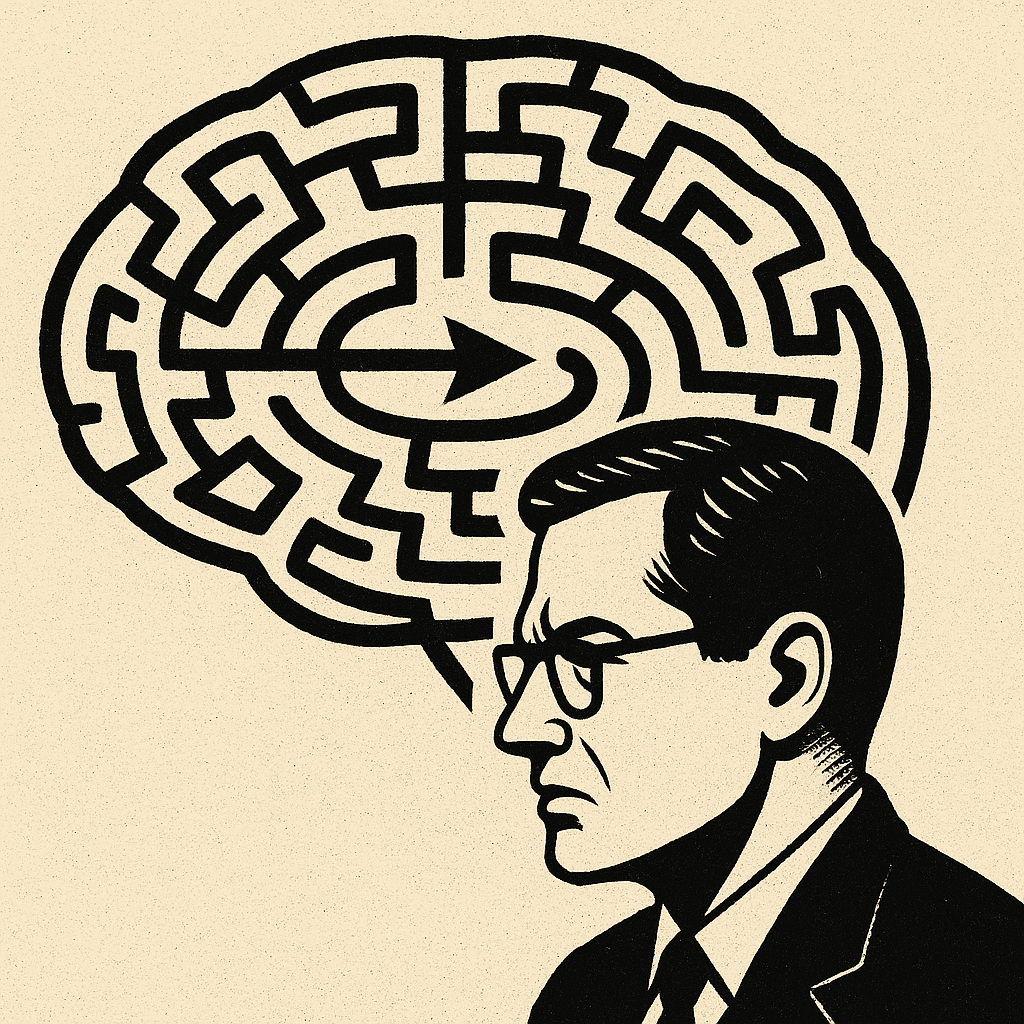
Deep work isn’t a luxury for leaders—it’s a competitive edge. In this research-backed guide, learn how to build focus, protect attention, and lead your team with clarity in a world designed to distract you.
In my earlier article, “Your Workplace Is Designed to Distract”, I explored how the modern office—both in physical design and organizational rhythm—systematically undermines deep, focused thinking. The response made it clear: I wasn’t the only one seeing it. Leaders are quietly burning out not because they’re doing too little, but because they’re doing too many shallow things, in too many short bursts, across too many fractured platforms, with no time left to think clearly about the work that actually matters.
This article is the natural follow-up: not a rehash of the problem, but a practical, research-backed blueprint for building deep work into your leadership rhythm. Because in an age of ambient noise, permanent notifications, and performative busyness, sustained focus is no longer just a personal productivity hack—it’s a leadership superpower.
Deep Work Is No Longer Optional
For most of modern history, leadership was defined by decisiveness, availability, and visible action. In a manufacturing or execution-driven world, that made sense: the leader’s job was to respond, resolve, and remove barriers quickly.
But that equation no longer holds.
Today, we live in a knowledge economy where our greatest contributions as leaders aren’t how quickly we respond, but how clearly we think. Strategy, systems design, people development, innovation—none of these emerge from scattered input. They require cognitive space. And space is exactly what most leaders have lost.
The pressure to be constantly reachable, constantly responsive, and constantly “on” has made true depth rare. And yet, the leadership tasks that matter most—solving ambiguous problems, anticipating second-order consequences, writing compelling vision, crafting feedback that lands—are all tasks that demand sustained, undistracted thought.
This is what Georgetown professor Cal Newport defines as deep work:
“Professional activities performed in a state of distraction-free concentration that push your cognitive capabilities to their limit. These efforts create new value, improve skill, and are hard to replicate.”
In contrast, shallow work—the reactive emails, low-value meetings, and status chatter that flood most leaders’ calendars—keeps us busy, but not better. And the cost isn’t just personal. It’s organizational. When leaders can’t think deeply, teams can’t align, strategies stay half-baked, and cultural problems persist just beneath the surface.
In short: we are drowning in noise and calling it leadership. Deep work is how we stop the drift.
What Deep Work Really Is (and Why It’s Misunderstood)
One of the reasons deep work remains rare, even among high-performing leaders, is that it’s widely misunderstood.
Deep work is not simply “getting things done.” It’s not inbox zero, or time blocking, or an early morning ritual with a fancy pen. Those can help, but they’re tactics. Deep work is fundamentally about mental immersion—the ability to enter a cognitively demanding space and stay there long enough to produce something of real value.
That might mean writing a strategic brief.
Or mapping the cause-effect loops in your organizational culture.
Or untangling the unspoken blockers behind a team’s stagnation.
What makes it deep isn’t the output—it’s the intensity and intentionality of the attention.
But in today’s culture of ambient distraction, depth is misread. It looks like slowness. It looks like under-communication. It looks, sometimes, like distance. So leaders often avoid it—not because they don’t want to think deeply, but because they fear appearing unavailable, disengaged, or less productive than their peers.
Ironically, the leaders most committed to serving others often sabotage their own thinking by trying to be omnipresent. They trade focus for responsiveness. But in doing so, they reduce their leadership to real-time reaction—when what’s really needed is upstream clarity.
Deep work isn’t a withdrawal from leadership. It’s the foundation of it.
The Hidden Enemies of Deep Work (Especially for Leaders)
Distraction isn’t just external. Yes, Slack, email, back-to-back meetings, and open offices make it harder to focus. But for most leaders, the real barrier to deep work is internalized expectation—a sense that their value is proven by being constantly available.
This makes sense, in a way. Leadership often begins with over-functioning. Rising leaders are rewarded for speed, initiative, and responsiveness. But as the scope of responsibility grows, that behavior starts to break down. The complexity of the role increases, but the behavior stays reactive. And depth suffers.
Some of the most persistent enemies of deep work for leaders include:
- Context Switching
Jumping between meetings, Slack threads, and project decisions creates cognitive residue. A study by Leroy (2009) showed that each context switch leaves a part of your brain attached to the previous task, reducing working memory and processing speed by up to 40%. - Decision Fatigue
Leaders are constantly asked to weigh in, approve, or unblock. But each micro-decision chips away at cognitive bandwidth. Without strategic separation, even low-level choices erode the capacity for higher-order thinking. - Urgency Culture
When everything feels urgent, nothing deep gets done. The inbox becomes the to-do list. As Newport notes, shallow work “feels” more productive because it produces visible results. But it’s the deep, invisible thinking that moves organizations forward. - “Availability as Value” Myth
Many leaders confuse accessibility with effectiveness. They equate being looped into everything with being in control. But leadership isn’t about being everywhere—it’s about knowing where your attention creates the most leverage. - Internalized Guilt Around Focus Time
Even when leaders carve out deep work time, they often feel guilty for it. A Slack message comes in, and they flinch. A missed email triggers anxiety. The result? Focus is scheduled, but not protected. The calendar says “strategic planning”—but the attention is still fragmented.
These enemies are not technological. They are cultural. And the only way to resist them is to rewire how we define value and restructure how we lead.
What Deep Work Does to Your Brain—and Your Leadership
If shallow work scatters your attention, deep work rewires it.
Multiple studies in neuroscience have shown that sustained attention not only improves task performance—it reshapes the brain itself. Repeated immersion in focused work increases gray matter density in the prefrontal cortex (the area responsible for complex thinking, emotional regulation, and decision-making). It also strengthens working memory and improves long-term problem-solving skills.
But this isn’t just cognitive. It’s emotional.
Leaders who engage in deep work report lower levels of reactivity, greater resilience to stress, and higher job satisfaction—not because their environment is easier, but because their inner world is less fragmented. They’re thinking longer thoughts. Seeing around corners. Anticipating patterns.
Deep work also restores a sense of agency. In a world that feels increasingly reactive, there’s something profoundly grounding about choosing to concentrate. To protect mental energy. To move upstream.
And for leadership specifically, deep work is what allows strategy to become more than instinct. It gives shape to vision. It adds weight to words. It separates reactive authority from thoughtful influence.
How to Build a Deep Work Operating Rhythm (Even in a Reactive Role)
The most common excuse leaders give for avoiding deep work isn’t laziness—it’s reality. “I’d love to carve out more thinking time,” they say, “but my job is too reactive.” And on the surface, that’s often true. Leadership roles come with real-time demands: issues arise, people need decisions, momentum gets stuck and waits for your response.
But deep work doesn’t require total isolation. It requires rhythm.
Leaders who thrive in reactive environments aren’t less busy—they’ve simply built intentional structures to protect their thinking. They’ve learned that clarity isn’t found in the gaps between meetings. It’s found when you create non-negotiable space for it.
Here’s how to start building a deep work rhythm—even when your calendar feels impossible:
1. Anchor Deep Work to Your High-Energy Zones
Not all hours are created equal. Pay attention to when your brain is sharpest—usually in the first 2–3 hours of the day—and guard that time like a strategic asset. Put your hardest, most important thinking tasks there. Don’t waste your peak cognition on Slack, inboxes, or status updates.
2. Treat Focus Like a Meeting With Your Future Self
If someone asked to meet with you to discuss vision, systems, and long-term impact, would you cancel on them last-minute to answer a low-context email? That’s what happens every time you abandon deep work. Block time. Show up. Don’t reschedule.
3. Use Defrag Rituals After Interruptions
Even with the best planning, interruptions will happen. The key is what you do next. Train yourself to pause for 60 seconds, breathe, and write down your original point of focus. This micro-ritual reduces cognitive residue and helps your brain reenter deep space faster.
4. Default to Asynchronous Communication (Where Possible)
Synchronous communication steals attention. When every question becomes a call, and every update becomes a meeting, deep work gets fractured. Wherever possible, lead by example in using written updates, voice memos, or structured async tools like Loom, Notion, or Coda.
5. Build Team-Wide Focus Hygiene
You can’t protect your own deep work if your team is drowning in shallow work expectations. Normalize “heads-down” hours. Schedule team-wide deep sprints. Publicly affirm behavior that honors others’ focus. Culture eats willpower for breakfast—so change the culture.
Deep work doesn’t happen because we wish for it. It happens because we build the conditions that allow it to survive under pressure.
Systemic Changes That Make Deep Work Scalable
Personal rituals are critical—but they’re not enough. In most organizations, it’s the systems that kill deep work, not the individuals. The calendar fills itself. The meeting invites multiply. The default assumption becomes: everyone should be available, all the time.
If you want deep work to be more than a personal discipline, you have to build structural alternatives to distraction. That means rethinking how time, communication, and decision-making flow inside your team.
Here’s what that looks like in practice:
1. Rethink Meeting Cadence and Design
Do your meetings exist because they’re necessary—or because they’re recurring? Audit your calendar quarterly. Replace status meetings with shared dashboards or async updates. Shorten by default. Create meeting-free windows (e.g., no calls before 11 a.m.). Don’t fill space with structureless conversation.
2. Create Cultural Permission for “Deep Sprints”
Normalize focused blocks of 90–120 minutes during the week—announced in advance, protected on the calendar. Let the team know: during this window, you’re not expected to respond. Then follow through. Model it. Celebrate it. Make space sacred again.
3. Build Decision Buffers to Reduce Fire Drills
When every decision needs immediate input from the top, deep work dies. Create clarity documents: What can be decided without you? What thresholds require a pause? Batch similar decisions. Empower people to solve at their level. Ambiguity invites interruption.
4. Formalize Focus Time in Your Leadership Operating System
Make deep work structural, not heroic. Embed it in onboarding, in team charters, in quarterly planning. Assign someone to protect it. Treat cognitive bandwidth like a resource to allocate, not an accident to protect after everything else is done.
Organizations that protect deep work at the system level win twice: they think better and move faster—because they waste less energy cycling through half-formed decisions.
Final Thought: Deep Work Is Moral Leadership
This isn’t just about personal productivity. It’s about stewardship.
If you’re in a leadership role, your thinking affects more than your inbox. It affects the clarity of your team. The soundness of your strategy. The integrity of your decisions. And in a world designed to scatter your attention, choosing to protect your focus is an act of moral leadership.
Because every time you guard your deep work time, you’re doing more than thinking clearly.
You’re signaling to your team what matters.
You’re modeling restraint in a culture of reactivity.
You’re showing people that creating value is more important than chasing visibility.
The truth is, your best leadership won’t happen in meetings.
It won’t happen in email threads.
It will happen in the space you fight to protect—where thought gets to deepen, ideas get to form, and real leadership work actually gets done.
That’s not selfish. That’s strategy.
And in this distracted world, it might be the most generous thing you do.
📩 Don’t lead in fragments.
Subscribe to The Influence Journal for longform insights on clarity, trust, and the systems that protect deep work in leadership.


Leave a comment