
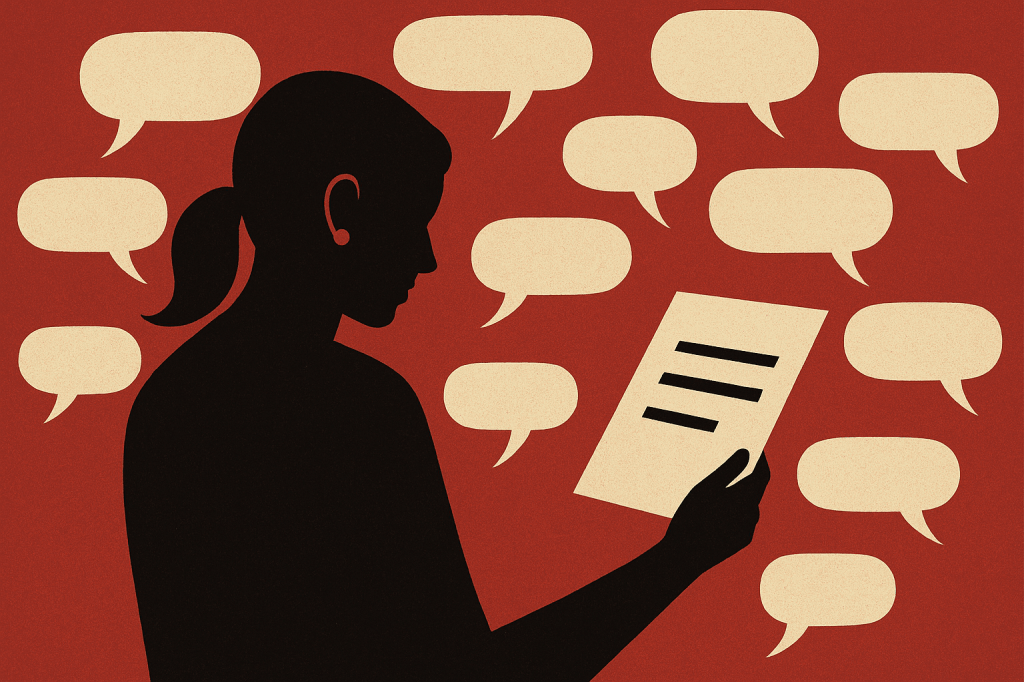
Constant feedback is killing trust. Learn how overcommunication creates feedback fatigue, stifles innovation, and quietly destroys team performance.
This article is a follow-up to my initial piece on “Feedback Fatigue,” where I first introduced the concept of how well-meaning leaders can unintentionally exhaust their teams through constant input. In this deeper dive, we explore the underlying psychology, the warning signs, and the long-term cultural cost of overcommunication in leadership.
A few years ago, I sat across from one of my most talented team members. We had just finished an event, and I was doing what I believed good leaders did—debriefing, offering encouragement, sharing thoughts on what could be improved. I thought I was being helpful. But as I spoke, I watched her shoulders drop. Her responses became shorter. Her eyes drifted. Finally, she said it: “It’s hard to feel like anything is ever good enough.”
To say this caught me off guard would be an understatement.
Her words didn’t come from anger or rebellion. It came from exhaustion—the weariness of constantly performing under a microscope. I hadn’t yelled. I hadn’t berated. I had simply filled every space with feedback. And without realizing it, I had created a culture where no work ever felt finished, no contribution felt celebrated, and no silence felt safe.
In today’s workplace, feedback has become a virtue. We are told that great leaders give frequent, candid input. That feedback is fuel for growth. That without it, teams drift into mediocrity and organizations lose their edge. In theory, this is true. Constructive feedback, delivered with empathy and clarity, can strengthen teams and unlock real development. But what happens when that feedback becomes constant? What happens when every meeting ends with five points of critique, every Slack message includes a suggestion, and every project review feels like a dissection?
We don’t talk enough about the psychological cost of feedback when it becomes relentless. We don’t often consider the subtle erosion that occurs when leaders communicate with their teams so continuously that their voices become indistinguishable from noise. Overcommunication isn’t just inefficient. It can be quietly devastating.
In this article, we’re going to explore the overlooked impact of feedback fatigue: what it is, how it develops, and why leaders who genuinely want to build strong, high-trust teams must learn when not to speak. We will unpack the cognitive and emotional burden that constant feedback imposes and offer practices for creating space that fosters trust, resilience, and meaningful growth.
What is Feedback Fatigue
Feedback fatigue is the phenomenon where the frequency and volume of input—whether praise, critique, or suggestion—overwhelms a team’s ability to process and apply it meaningfully. It often arises not from malice or poor leadership, but from a well-intentioned desire to develop others. Leaders want to help. They want to coach. They want to improve performance. But in the process, they may end up drowning their team in a sea of commentary.
Unlike performance reviews or structured coaching, feedback fatigue is ambient. It creeps in during casual interactions, post-meeting debriefs, spontaneous messages, or running commentary on works-in-progress. Over time, it reshapes how people relate to their work. Every task becomes a test. Every comment becomes a correction. Every moment becomes an evaluation.
The result isn’t just exhaustion. It’s disengagement. Employees may nod along, but they start caring less. Initiative shrinks. Creativity flattens. People stop taking risks, not because they’re lazy, but because it feels safer to avoid doing anything that might trigger another round of “helpful suggestions.”
The Psychology Behind It
At its core, feedback fatigue is not a productivity issue. It’s a psychological one. The human brain has limited capacity for processing input, particularly under pressure. Constant feedback increases cognitive load, which reduces working memory and impairs decision-making. When everything is subject to critique, nothing feels settled. Team members begin to second-guess not just their output, but their instincts.
What makes this especially insidious is the mismatch between intent and impact. A leader may offer constant feedback to demonstrate engagement, investment, or care. But the recipient may interpret that same pattern as scrutiny, dissatisfaction, or distrust. In leadership, perception matters more than intention. And when the perceived message is, “You’re not quite doing it right,” even the most well-meaning coaching can become a source of anxiety.
There’s also a deeper layer tied to psychological safety. The most innovative teams are not just those who share ideas freely, but those who know when they are safe from overreaction. Too much feedback signals that there is always something wrong—always something to fix, adjust, or explain. Over time, this cultivates a culture of defensive performance rather than honest contribution. People start curating their behavior, speaking in safe soundbites, and avoiding work that feels vulnerable. In a feedback-saturated environment, survival often looks like inaction.
Why Leaders Often Don’t See It
One of the most painful aspects of feedback fatigue is that leaders often don’t recognize when they’re the cause. Especially among high-performing, well-meaning managers, feedback is seen as a gift. And sometimes it is. But gifts given constantly, without consent or context, can become oppressive.
Leaders may think they are helping. In reality, they may be signaling that nothing is ever good enough. They may be creating an unspoken rule: “Everything will be judged, all the time.”
What’s tricky is that early signs of feedback fatigue look like disengagement or poor attitude—which often leads to even more feedback. It becomes a feedback loop in the worst sense. The team zones out. The leader ramps up input. The team disconnects further. And eventually, trust quietly breaks down.
How to Lead Without Creating Feedback Fatigue
So how do you communicate well without suffocating your team? Here are some practical strategies:
- Audit Your Feedback Cadence. Are you giving feedback after every meeting? Every message? Every deliverable? Pull back. Let work speak for itself when possible. Not everything needs a postmortem.
- Clarify the “Why” Behind Your Input. Is this feedback to improve performance, align expectations, or satisfy your own anxiety? If you can’t articulate a reason beyond impulse, it can probably wait.
- Choose Silence as Strategy. Healthy silence builds trust. It tells your team: I see your work, and I trust you with it.
- Create Feedback-Free Zones. Carve out time or space in your rhythm where people know they won’t be evaluated—a weekly creative block, a no-feedback channel, or a project phase where iteration is expected before commentary.
- Focus on Identity, Not Just Output. Affirm who your team is becoming, not just what they produce. Feedback that builds identity lasts longer than feedback that only polishes performance.
Lead With Trust, Not Constant Correction
The best leaders don’t disappear. But they also don’t smother. They understand that wisdom is knowing when to speak, and maturity is knowing when to hold back.
Feedback matters. But so does silence. So does space. So does the internal voice that each team member is learning to trust.
According to research published in the Harvard Business Review, teams that report feeling psychologically safe are more likely to take creative risks and less likely to experience burnout. But the same studies warn that this safety is undermined when leaders overload their teams with constant correction. Too much input becomes indistinguishable from control—and when control replaces trust, performance eventually collapses under the weight of anxiety.
You don’t build a high-trust culture by commenting on everything. You build it by creating the room for others to own their growth, struggle through ambiguity, and emerge confident that their worth is not in constant need of review.
So here’s the real challenge: Can you lead in a way that helps your team grow—without needing to prove that you helped them grow?
If you’re serious about building a culture where people perform at their best because they feel safe, subscribe to The Influence Journal for more longform, research-based articles on trust, leadership psychology, and the culture you’re actually creating.


Leave a reply to Feedback Fatigue: How High-EQ Leaders Burn Out Helping Their Teams Grow – The Influence Journal | Leadership, Trust, and the Psychology of Culture Cancel reply