
Why most leaders don’t recognize tension until it’s too late—and what to do differently.
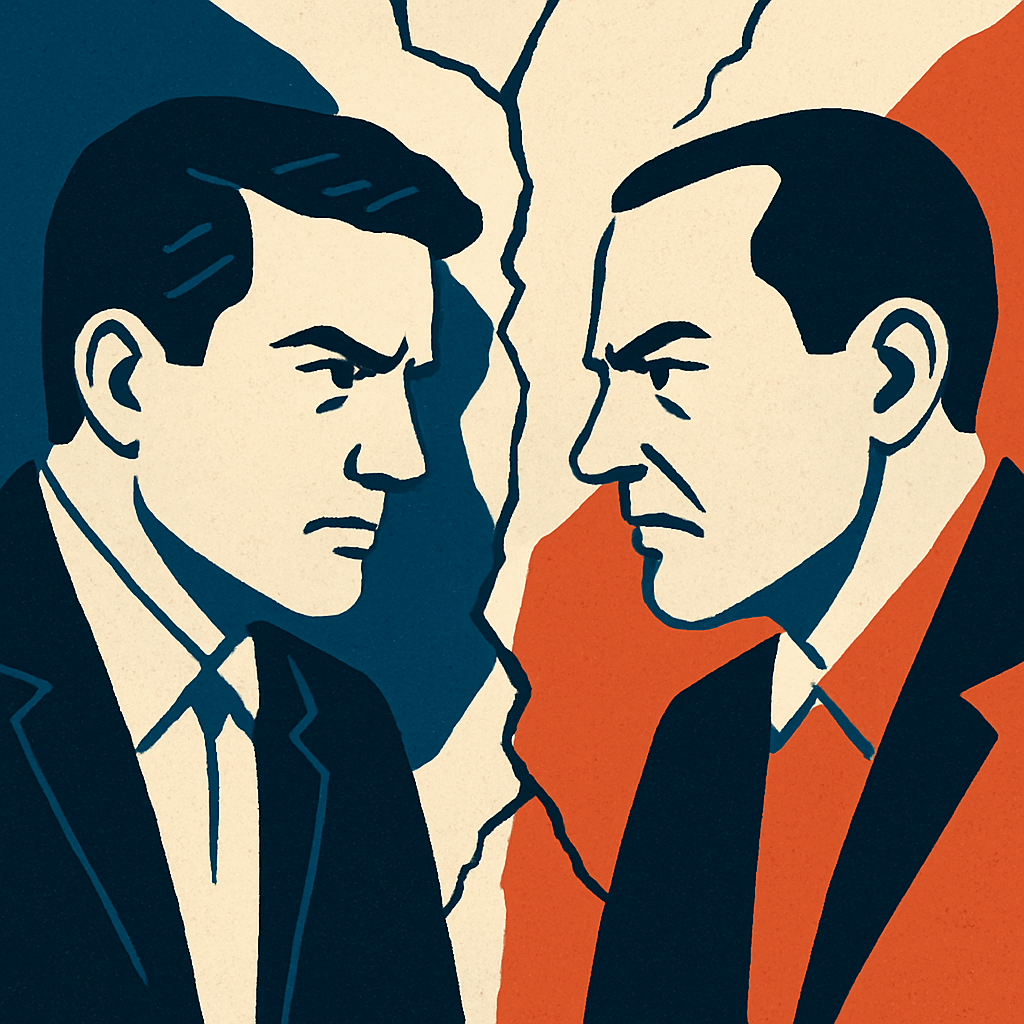
Learn how to handle workplace conflict without escalation. This leadership psychology piece explores conflict resolution strategies, unspoken tension, and how high-trust leaders address issues before they become cultural liabilities.
Conflict Doesn’t Start in Meetings—It Starts in Unspoken Expectations
Workplace conflict rarely begins with a dramatic moment. It’s not usually a shouting match or a blown deadline. More often, it starts in silence. A team member resents the decision they weren’t consulted on. A direct report pulls back after receiving vague feedback. A leader senses tension but assumes it will sort itself out. Then the next meeting feels slightly off. People interrupt each other more. Deadlines slip with less explanation. Trust erodes—not because someone was hostile, but because something went unaddressed.
That’s the thing about conflict in most teams: it escalates subtly. It doesn’t demand your attention. It simply accumulates until it begins to distort the dynamics of the group. What began as a difference in perspective hardens into a lack of trust. Miscommunication turns into assumption. Assumption turns into distance. And by the time you recognize there’s a real problem, the damage has already settled in.
Many leaders try to handle workplace conflict only after it surfaces—when emotions are high, when performance is impacted, or when turnover becomes a real risk. But by that point, they’re not resolving tension. They’re negotiating fallout. The goal isn’t just to stop the bleeding. The goal is to build the kind of culture where tension is surfaced early and resolved before it metastasizes.
That doesn’t happen by accident. It takes a system. And it starts with the willingness to notice earlier, engage sooner, and disagree better.
Why Workplace Conflict Escalates (Even When No One’s Trying to Start a Fight)
Most conflict resolution strategies focus on tactics: how to give feedback, how to de-escalate emotion, how to find common ground. Those are all valuable—I’ve written at length about all of them—but as a conflict resolution strategy, they’re incomplete.
The deeper problem is that most workplace conflict isn’t about disagreement. It’s about disconnection. And that disconnection is often the result of structural patterns leaders never noticed.
Psychologists Morton Deutsch and Peter Coleman, in decades of conflict research, identified three primary conditions that cause disputes to escalate unnecessarily: ambiguity, competitive framing, and unacknowledged emotion. These don’t show up in HR documentation—but they show up in the tone of an email, the power dynamic of a Zoom call, or the subtle withdrawal of a team member who no longer feels safe bringing their concerns to the surface.
Let’s look at each briefly:
- Ambiguity creates space for assumption. When roles are unclear, goals are shifting, or communication is inconsistent, people fill in the gaps with fear, frustration, or blame. They don’t mean to—it’s what humans do in the absence of clarity.
- Competitive framing turns difference into threat. When people believe there’s only room for one perspective to win, collaboration dissolves. Even healthy feedback becomes risky. Conflict shifts from “How do we solve this?” to “How do I protect myself?”
- Unacknowledged emotion adds fuel beneath the surface. When frustration, insecurity, or resentment go unnamed, they don’t disappear. They fester. And they eventually erupt in ways that feel disproportionate to the original issue.
The question isn’t whether these factors are present in your workplace. They are. The question is whether you’ve built systems—and leadership reflexes—that detect and address them before they cause long-term damage.
The Moment I Learned It Was Mine to Own
Years ago, I stepped into a senior leadership role in a large organization—one with strong vision, public visibility, and a reputation for excellence. I was joining the senior staff as a strategic leader, not a fixer. At least, that’s what I thought.
What I walked into was a team in quiet disarray. Communication breakdowns. People working around each other instead of with each other. Decision-making slowed to a crawl not because people didn’t care—but because no one trusted the process. At first, I assumed this wasn’t mine to fix. After all, I hadn’t created the problem. I had inherited it.
A few weeks in, after yet another meeting left me frustrated and disoriented, I vented over lunch with a mentor. I laid out everything I was seeing—the misalignment, the passive tension, the decisions that no one seemed able to make. I finished with something like, “I didn’t do any of this. I just got here. This isn’t on me.”
He let me finish. Then he said, almost offhandedly:
“Sure. But if it’s still like this in a year, it will be on you. Because now you see it. Now it’s yours to lead.”
That sentence snapped something into focus. I hadn’t realized that by distancing myself from the conflict, I was avoiding the very responsibility I had been hired to carry. I had a choice: protect my ego and preserve the illusion that I was “above” the mess—or own it fully, and lead differently.
That was the moment I stopped waiting for the team to change, and started changing how I led it.
What High-Trust Leaders Do Differently
The leaders who handle workplace conflict without escalation don’t wait for tension to announce itself. They lead in a way that makes conflict visible early—and safe to address directly.
Here’s what that looks like in practice:
🔹 1. They name tension before it becomes personal.
Great leaders learn to narrate what’s happening in the room. They say things like, “It feels like there’s hesitation around this direction,” or “We’re circling something that we’re not saying directly.” This doesn’t assign blame—it creates permission. Most conflict grows in silence. Naming it creates air and light.
🔹 2. They build decision-making frameworks, not decision surprises.
Ambiguity fuels resentment. When team members don’t know how a decision is being made—or whether their voice matters—they start to assume the worst. High-trust leaders clarify the process: what’s up for discussion, who’s making the call, and how input will be used.
🔹 3. They stay emotionally accessible.
Conflict escalates when power is unclear or emotionally unavailable. If your team only hears from you when something’s wrong, they won’t bring up problems until they’re explosive. Accessible leaders don’t wait to be looped in. They build relational safety proactively so issues can be surfaced while they’re still small.
🔹 4. They separate disagreement from disloyalty.
In fragile cultures, disagreement is seen as subversive. In healthy ones, it’s a contribution. Research from Harvard’s Amy Edmondson on psychological safety shows that when teams feel safe to dissent without repercussion, they not only resolve conflict faster—they innovate better. The trick isn’t avoiding disagreement. It’s making sure people feel safe enough to share it.
A Simple Framework to Resolve Conflict Without Escalation
While every situation is unique, most conflict resolution strategies benefit from a simple, repeatable structure. Here’s one I use with teams:
1. Surface the Specifics
Start by naming what’s real. Not “vibes.” Behavior. Language. Missed expectations. Don’t generalize. Avoid accusations. Just describe the gap between what was expected and what happened.
“We agreed to loop in the full team before sending out proposals. That didn’t happen this time, and I want to understand what got in the way.”
2. Explore the Interpretation
Ask how the other person experienced the situation—and how they interpreted your behavior, too. This isn’t about finding the objective truth. It’s about surfacing assumptions. Most conflict is a difference in story, not intention.
“Can you walk me through how you saw it? I want to make sure I understand what this felt like from your side.”
3. Acknowledge the Emotion
Even in professional settings, conflict resolution requires emotional intelligence. If someone feels dismissed, disrespected, or blindsided, name that—even if it wasn’t your intent. Repair happens when people feel understood, not when they’re forced to concede.
“I get why that would be frustrating. If I were in your shoes, I’d probably feel the same.”
4. Realign and Reinforce
Clarify what needs to change—and how you’ll prevent future breakdown. Be specific. Conflict is only resolved when the path forward feels credible.
“Next time, I’ll make sure we review drafts together before they’re sent out. Let’s set a 15-minute touchpoint each Monday to stay aligned.”
This approach isn’t a magic trick. But it creates a rhythm of resolution—one where conflict becomes a moment of refinement, not a rupture.
Conflict Doesn’t Destroy Cultures. Avoidance Does.
Most leaders aren’t afraid of conflict. They’re afraid of escalation. They want to address issues but worry about emotional volatility, team politics, or losing credibility. So they delay. They let things slide. They hope things settle on their own.
But they rarely do.
Conflict ignored becomes resentment. Resentment becomes disengagement. And disengagement—especially from high-capacity, emotionally intelligent people—doesn’t show up in obvious ways. It shows up in silence, self-protection, and eventual exit.
The real job of leadership isn’t to suppress conflict. It’s to design environments where healthy tension can emerge early, be addressed constructively, and lead to greater clarity. That requires courage. It also requires skill. But mostly, it requires intention.
Conflict is inevitable. Escalation is optional.
Need a Conflict Strategy That Doesn’t Rely on Luck?
If you’re leading a team where tension is rising—or where it’s gone quiet in all the wrong ways—it might be time to step back and reframe how your team handles conflict.
Our Identity-First Leadership Sessions are designed to help executive teams and department leads surface friction points, rebuild trust dynamics, and establish clear conflict resolution strategies before things escalate.
📩 Reach out at influencejournalforleaders@gmail.com to schedule a call.
Let’s resolve what’s quietly unraveling—before it becomes a crisis.


Leave a reply to Leaders Are Story Shapers: How Culture Is Formed by What You Choose to Remember – The Influence Journal | Leadership, Trust, and the Psychology of Culture Cancel reply